Gut Health Supplements Ayurvedic: Triphala in Modern Digestive Formulas
Quick answer
Triphala is a blend of three dried fruits — amalaki, bibhitaki and haritaki — combined in equal parts and used in Ayurveda for well over a thousand years, mostly for bowel regularity. Its best-supported modern use is the same one: gentle support for regularity. The wider claims attached to it in supplement marketing, covering weight, blood sugar, oral health and general detoxification, rest almost entirely on laboratory and animal work rather than good human trials.
- Traditional dosing is roughly 1–5 g of the equal-parts powder daily, usually taken in the evening with warm water.
- Human evidence is strongest, and still modest, for regularity; other claims are preliminary at best.
- Heavy-metal contamination has been documented in a minority of imported ayurvedic products, so batch testing matters more here than in most aisles.
Of all the gut health supplements ayurvedic traditions have handed to the modern shelf, triphala is the one that turns up most. It appears in digestive capsules, in cleanse kits, in powdered greens blends and increasingly in Western weight-management formulas that want a heritage ingredient on the panel. It has a genuinely long record of use and a genuinely thin record of rigorous testing, and the gap between those two things is worth walking through carefully. The other Ayurvedic staple on the same shelf is ashwagandha, cortisol and stress eating, where the trial base is larger but the caveats run in the same direction.
The three fruits, individually
Triphala means "three fruits" in Sanskrit, and the classical formula is exactly that, in equal parts by weight.
Amalaki (Emblica officinalis, also written Phyllanthus emblica, the Indian gooseberry) is the vitamin C fruit of the three, though most of its measured antioxidant activity in laboratory assays comes from its tannins — emblicanin, gallic acid and ellagic acid — rather than from ascorbic acid alone. It is the sour, cooling component in the traditional framing.
Bibhitaki (Terminalia bellirica) is astringent, and in classical texts is described as acting on the respiratory tract as much as the digestive one. Chemically it is dominated by gallotannins and ellagitannins.
Haritaki (Terminalia chebula) is the fruit doing most of the work behind triphala's reputation for regularity. It contains anthraquinone glycosides alongside a heavy tannin load, and anthraquinones are the same broad class of compound found in senna and cascara — stimulant laxatives. That is a mechanistic fact worth holding onto, because it explains both the effect people notice and the reason indefinite daily use is not obviously wise.
Ayurvedic theory frames the combination as balancing all three doshas, which is a coherent internal logic rather than a claim testable by modern methods. It is fair to describe the tradition accurately without implying the framework has been validated by trials, because it has not been, and it was never designed to be.

What the human evidence actually shows
Triphala has an enormous preclinical literature. Cell culture and rodent studies have looked at antioxidant capacity, antimicrobial activity against oral and gut organisms, anti-inflammatory signalling, wound healing, blood glucose, lipids and tumour cell lines. That volume is often presented as though it were weight of evidence. It is not; it is weight of interest. A compound that does something in a dish has cleared the lowest bar there is. That gap between a dish and a living gut is set out in full in gut bacteria and body weight: what is actually established.
The human literature is much smaller. The clearest and most consistent signal is for bowel regularity and stool frequency, which is also the use the tradition itself emphasises — and given the anthraquinone content of haritaki, it is the finding you would predict. Beyond that, there are small trials touching on dental plaque and gingival health when triphala is used as a mouth rinse, and a scattering of short studies on metabolic markers. These are typically small, frequently unblinded, often conducted at a single site, and rarely replicated.
Researchers who have surveyed the ayurvedic literature as a whole repeatedly make the same two observations: the studies are of low methodological quality, and reporting is inconsistent enough that pooling results is difficult. That is not a dismissal of the tradition. It is an accurate description of what has and has not been tested to a modern standard.
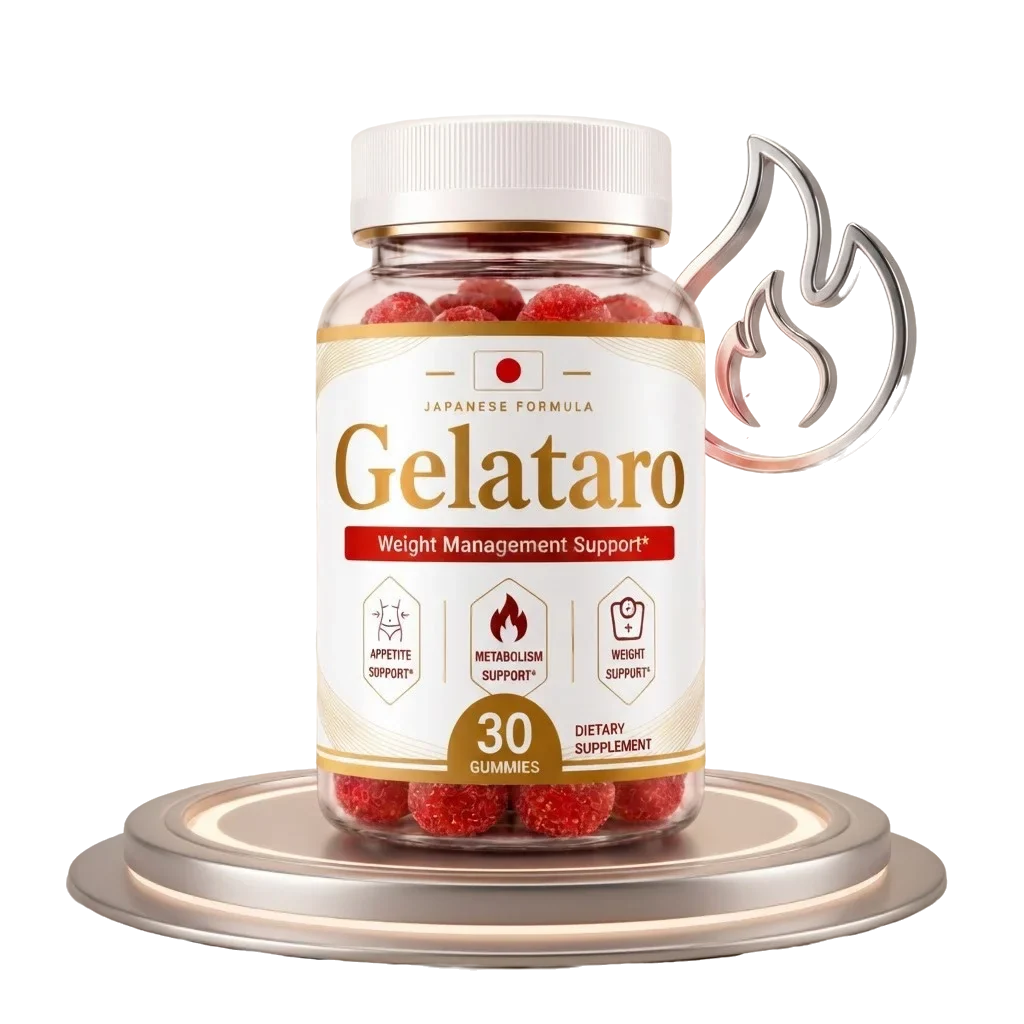
Check the current Gelataro price
If you are trying to work out where to buy weight loss supplements safely, buying direct removes the repackaging and storage unknowns of a marketplace listing. Current bundle pricing, free US shipping on 3 and 6 bottles, 60-day money-back guarantee.
Order NowDose forms and how they compare
The gap between a traditional preparation and a modern capsule is wider for triphala than for most ingredients, because the traditional dose is measured in grams and the capsule dose is usually measured in hundreds of milligrams. The table below sets the common forms side by side. Amounts reflect traditional practice or typical retail servings, not a recommendation.
| Form | Typical amount | What it is | Evidence strength (digestive outcomes) |
|---|---|---|---|
| Traditional churna (loose powder) | About 1–5 g once daily, usually evening | Equal parts dried amalaki, bibhitaki, haritaki, ground | Limited — long traditional use, small modern trials for regularity |
| Powder in capsules | Often 500–1000 mg per capsule, several capsules | The same powder, encapsulated for palatability | Limited — same material, dose often below traditional levels |
| Concentrated extract capsule | Often 250–500 mg, ratio rarely stated | Solvent extract, potency depends on an undisclosed ratio | Weak — not directly comparable to powder studies |
| Triphala inside a proprietary blend | Usually undisclosed | One line among many, amount hidden | Weak — unquantified, so nothing transfers from research |
| Triphala for weight loss specifically | Not established | Not a validated indication | Very weak — no adequate human trials support it |
Two things fall out of that comparison. A capsule containing 500 mg of powder is delivering something like a tenth of a traditional gram-level dose, so a bottle that looks generous may be well under what the tradition itself uses. And an extract without a stated ratio cannot be compared to either — a 10:1 extract at 300 mg and a 4:1 extract at 300 mg are different products wearing the same number.

Why triphala keeps appearing in weight formulas
The commercial logic is easy to read once you know what to look for. Triphala arrives with three assets a formulator wants: a heritage story that predates modern marketing, a real effect on regularity that a customer will notice within days, and a large preclinical literature that can be cited without anything being misrepresented outright.

The noticeable effect is the important part. A product that changes bowel habit in the first week feels like it is working, and that felt confirmation is doing conversion work that the underlying evidence does not support. Regularity is a genuine quality-of-life outcome and worth having. It is not fat loss, it is not metabolic change, and short-term scale movement that follows a laxative effect is not the same as a change in body composition.
This is also where Gelataro should be described accurately rather than flatteringly. It is an apple-cider-vinegar and pectin chewable rather than an ayurvedic formula — pectin is a soluble fibre that gels and slows gastric emptying, and acetic acid has been studied around post-meal glucose. Those are different mechanisms from triphala's, and anyone stacking a daily digestive capsule alongside a fibre gummy should know they are pulling two different levers, not doubling one. Our piece on enteric-coated peppermint oil makes the same argument about a third mechanism entirely.
It is why searching for the best gut health daily supplement rarely resolves into a single answer. The shelf is not a ranking; it is a set of tools aimed at different problems, and the honest version of the question is which outcome you are actually trying to move.
A laxative effect you can feel within a week is the most persuasive thing a digestive supplement can do, and one of the least informative. Feeling something happen is not evidence that the thing you were promised is happening.
Quality, contamination and what to check
This is the section that matters most for this particular category, because the risk profile is different from a Western single-ingredient capsule.
Independent testing programmes and published surveys have repeatedly found detectable lead, mercury or arsenic in a minority of imported ayurvedic products sold in the United States. The highest-risk category is rasa shastra preparations, in which metals and minerals are deliberately included as part of the traditional formulation. Plain herbal preparations such as triphala are lower risk, but the supply chain runs through agriculture and drying in regions where soil and airborne contamination vary, so the risk is not zero and it is not theoretical.
Practical checks, in order of usefulness: a third-party heavy-metal test with a certificate of analysis available for your batch; a named manufacturer and a physical address, not just a brand name; an identity test confirming the three species rather than a plausible-looking powder; and a full-disclosure panel rather than a proprietary blend. A product that meets all four is uncommon. A product that meets none is very common, and usually the cheapest option in a weight loss supplement price comparison, which is not a coincidence.
What triphala cannot do
Stated plainly, because vagueness in this section is how supplement copy goes wrong.
- It does not treat, cure or prevent any disease. Not diabetes, not obesity, not inflammatory bowel disease, not cancer. Preclinical findings in any of those areas are hypotheses, not results.
- It does not detoxify anything. There is no measurable quantity called a toxin load that this or any supplement has been shown to reduce. Regularity is regularity.
- It is not a weight-loss agent. Adequate human trials supporting weight change do not exist, and an early drop on the scale after a laxative effect is water and stool weight.
- It is not automatically safe long term. Anthraquinone-containing botanicals are generally advised for short-term rather than indefinite daily use, and the same caution reasonably extends here.
- It is not for everyone. Avoid in pregnancy and breastfeeding. Its tannins can reduce absorption of iron and of some medications, so spacing doses away from prescriptions is sensible, and anyone on blood glucose or blood-thinning medication should ask a clinician first.
- It cannot be evaluated from a hidden blend. If the amount is not on the panel, the ingredient is a story rather than a dose.
How to read a gut health supplements ayurvedic label
- The three species, named in Latin. Emblica officinalis, Terminalia bellirica, Terminalia chebula — and the fruit as the plant part.
- Powder or extract, stated. And if extract, the ratio. This is the single most common omission.
- Milligrams per serving, per ingredient. Equal parts should mean equal parts, and the panel should show it.
- Heavy-metal testing. Named laboratory, certificate available for the batch. In this category it is not optional.
- Serving size and servings per container. Three capsules twice a day empties a bottle in ten days, whatever the front label implies.
- The required FDA disclaimer. Present and correct is normal. Absent, alongside disease language, is a reason to close the tab.
Run those checks across the gut health supplements ayurvedic aisle and the field narrows quickly — which is the point. The tradition is old and worth respecting. The label in front of you was written last year by a marketing department, and it deserves the same scrutiny as any other.
Frequently asked questions
What is triphala made of?
Triphala is a blend of three dried fruits: amalaki (Emblica officinalis, Indian gooseberry), bibhitaki (Terminalia bellirica) and haritaki (Terminalia chebula). The classical preparation combines them in equal parts by weight as a powder, though many modern capsules use extracts and do not always state the ratio.
What does the human evidence for triphala actually show?
The strongest signal in human studies is for bowel regularity, where triphala has been used traditionally as a gentle laxative and where small trials report improvement. Laboratory and animal work on antioxidant, antimicrobial and metabolic effects is extensive, but human trials are small, short and often of low methodological quality, so those wider claims remain unproven.
How much triphala is normally taken?
Traditional use is roughly 1 to 5 grams of the equal-parts powder once daily, usually in the evening with warm water. Capsule products vary widely, from a few hundred milligrams of concentrated extract to gram-level doses of plain powder, and those two are not equivalent even when the number on the bottle looks similar.
Are gut health supplements ayurvedic formulas tested for heavy metals?
Not automatically. Independent testing has repeatedly found lead, mercury or arsenic in a minority of imported ayurvedic products, most often in metal-containing rasa shastra preparations rather than plain herbal ones. Buy from suppliers that publish third-party heavy metal testing and provide a certificate of analysis for the batch.

See what Gelataro is built from
A chewable apple-cider-vinegar and pectin formula with the full ingredient panel published. Current bundle pricing, free US shipping on 3 and 6 bottles, and a 60-day money-back guarantee on the official page.
Order Now